

Advantages and Disadvantages of Stacker Forklifts – Should You Invest?
27
Th4
Th4
What is a Stacker Forklift?
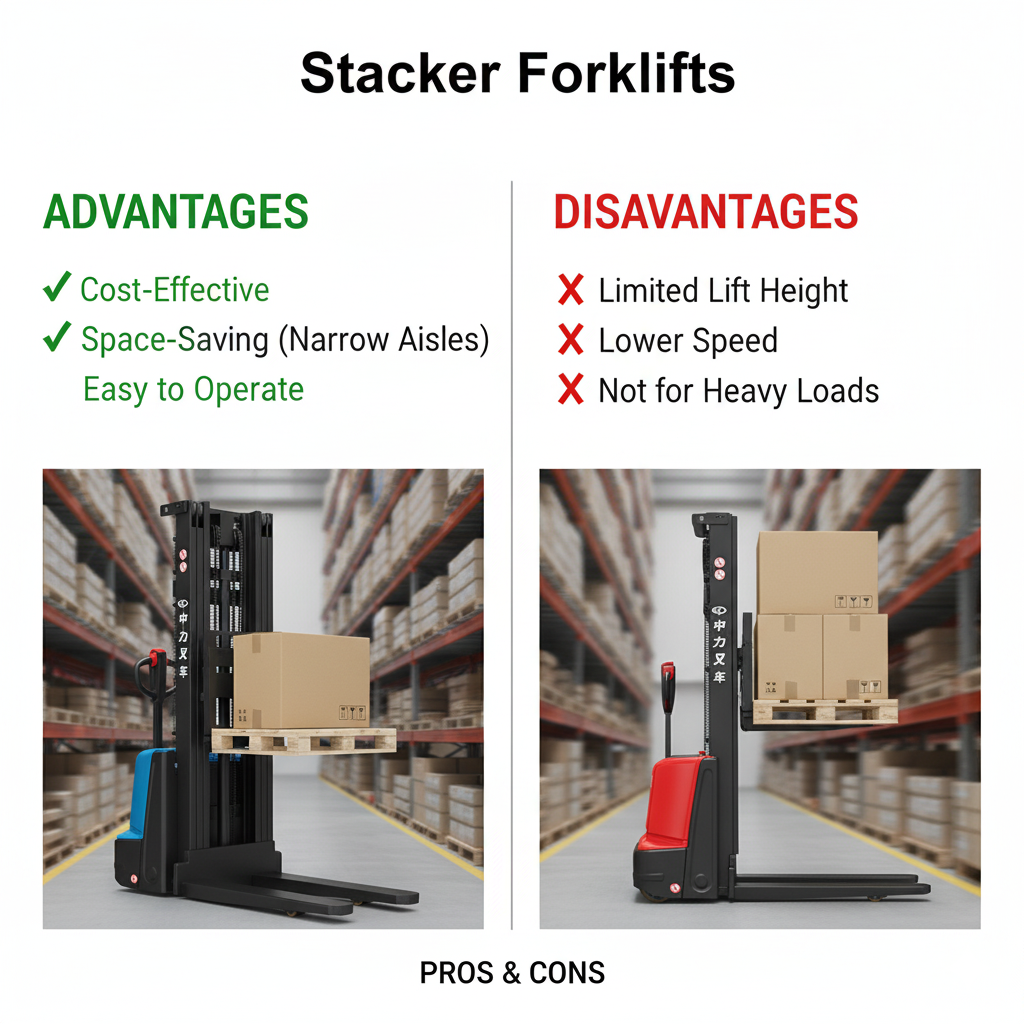
A stacker forklift (also known as a pallet stacker or walkie stacker) is designed for lifting, moving, and stacking pallets in warehouses. It is an ideal solution for businesses with limited space or narrow aisles.
Typical specifications:
- Load capacity: 1 – 2.5 tons
- Lifting height: 3 – 5 meters
- Operation type: walk-behind or ride-on
Advantages of Stacker Forklifts
1. Compact Design – Perfect for Narrow Spaces
Stackers are small and agile, allowing:
- Easy operation in aisles as narrow as 1.5 – 2.5 meters
- Maximum warehouse space utilization
2. Affordable Investment Cost
Compared to diesel or sit-down forklifts:
- Lower purchase cost
- Ideal for startups and small businesses
3. Easy to Operate
- Simple controls
- Minimal training required
4. Improves Storage Efficiency
- Lifting height of 3–5 meters
- Enables multi-level pallet stacking
5. Eco-Friendly (Electric Models)
- Zero emissions
- Low noise operation
6. Low Operating Cost
- Energy-efficient
- Easy maintenance
Disadvantages of Stacker Forklifts
1. Limited Capacity and Height
- Not suitable for loads over 2.5 tons
- Not ideal for heights above 6 meters
2. Not Suitable for Rough Terrain
- Works best on flat surfaces
- Poor climbing ability
3. Slower Operation Speed
- Not ideal for high-volume operations
- Lower productivity than larger forklifts
4. Stability Issues at High Lifts
- May become unstable when lifting high
- Requires careful operation
5. Battery Dependency
- Requires regular charging
- Downtime when battery is low
When Should You Use a Stacker Forklift?
👉 Suitable when:
- Warehouse space is limited
- Load is under 2 tons
- Lifting height is 3–5 meters
- Budget is limited
👉 Not suitable when:
- Heavy-duty or continuous operation is required
- Outdoor or uneven terrain is involved
Conclusion
Stacker forklifts are a cost-effective, flexible, and efficient solution for small to medium warehouses. Choosing the right equipment will help optimize costs and improve productivity.