

What Are Transistors, MOSFETs, and IGBTs? Differences and Practical Applications in Electrical Systems and Electric Forklifts
Th1
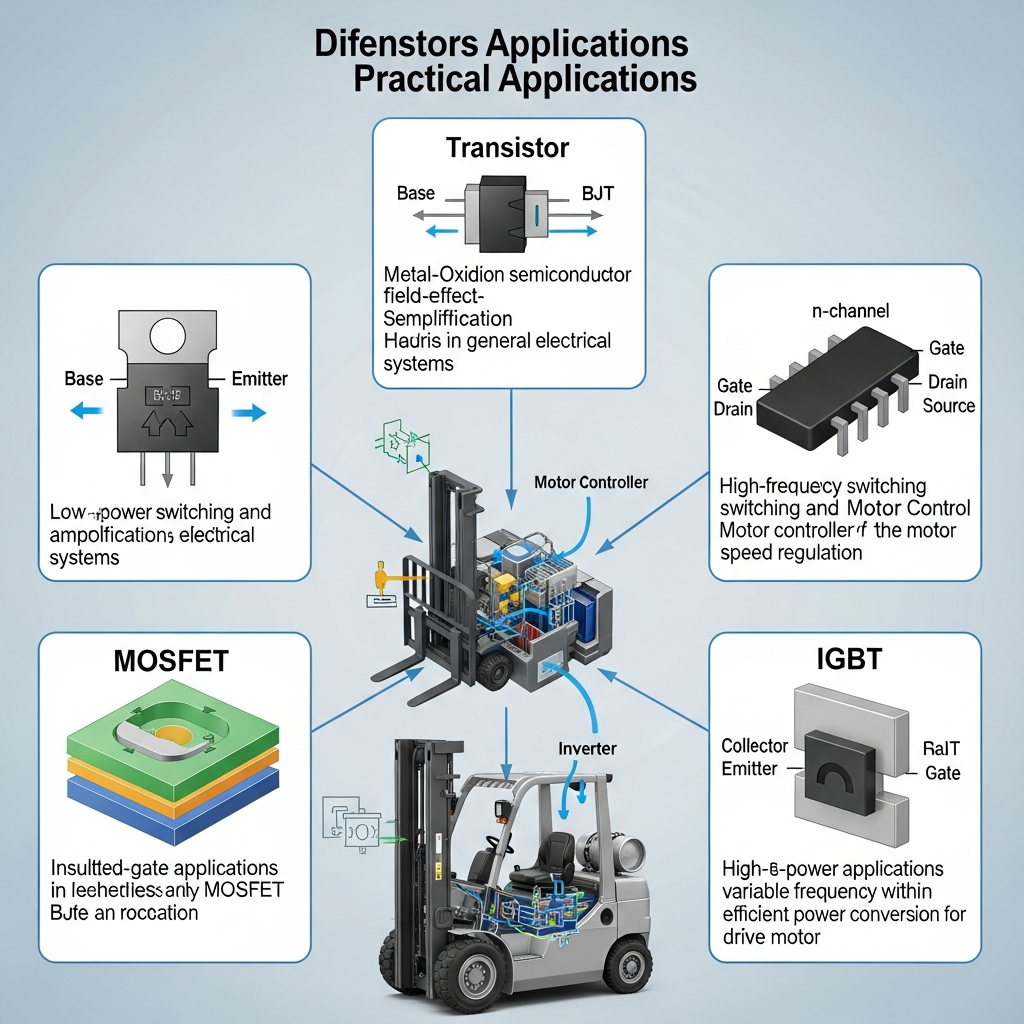
In the field of power electronics, especially in electric forklifts, inverters, and motor controllers, components such as Transistors, MOSFETs, and IGBTs are widely used. However, many people still confuse these devices or do not fully understand their differences and applications.
This article will help you clearly understand each component, compare them effectively, and choose the right device for real-world applications.
1. What Is a Transistor?
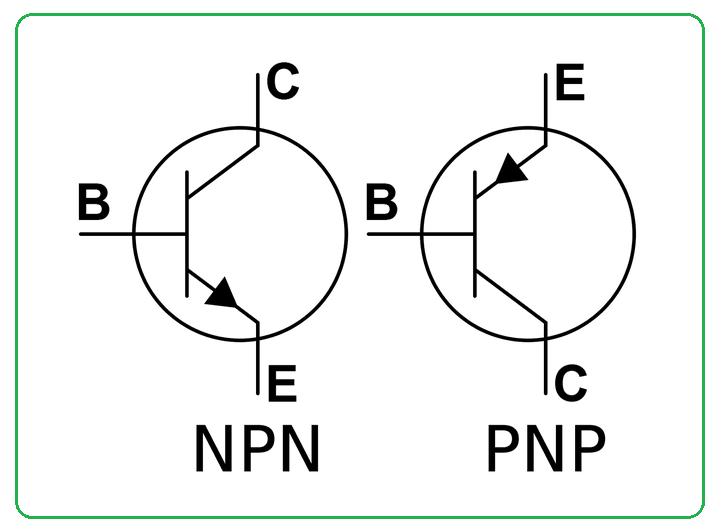

A transistor is a semiconductor device used to:
-
Amplify electrical signals
-
Switch electrical current on and off
Common Type: BJT
The most common transistor is the BJT (Bipolar Junction Transistor), including:
-
NPN
-
PNP
Operating Principle
A small current applied to the Base (B) controls a much larger current flowing between the Collector (C) and Emitter (E).
Advantages
-
Good signal amplification
-
Low cost
-
Easy to use
Disadvantages
-
Requires continuous control current
-
Generates more heat
-
Not suitable for high-power applications
Applications:
Audio circuits, low-power control circuits, basic electronic systems
2. What Is a MOSFET?
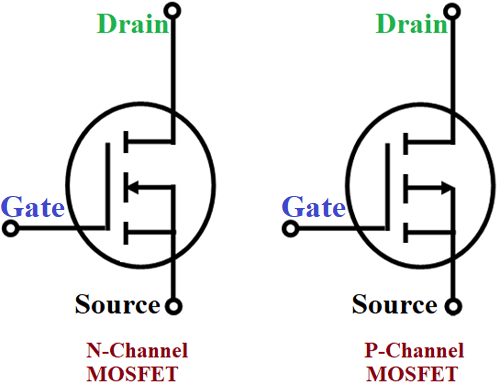
MOSFET (Metal Oxide Semiconductor Field Effect Transistor) is a voltage-controlled transistor and is one of the most commonly used power devices today.
Operating Principle
-
Controlled by voltage at the Gate (G)
-
Consumes almost no control current
Pin Configuration
-
Gate (G) – control terminal
-
Drain (D) – output terminal
-
Source (S) – input terminal
Advantages
-
Very fast switching speed
-
High efficiency and low heat loss
-
Ideal for high-frequency switching
Disadvantages
-
Lower voltage tolerance compared to IGBTs
-
Sensitive to static electricity
Applications:
Switching power supplies (SMPS), DC motor controllers, small to medium electric forklifts, lithium battery chargers
3. What Is an IGBT?

IGBT (Insulated Gate Bipolar Transistor) combines the advantages of MOSFETs and BJTs, making it ideal for high-power applications.
Operating Principle
-
Voltage-controlled like a MOSFET
-
Handles high current and voltage like a BJT
Pin Configuration
-
Gate (G)
-
Collector (C)
-
Emitter (E)
Advantages
-
High voltage and current capability
-
Stable and reliable operation
-
Suitable for industrial environments
Disadvantages
-
Slower switching speed than MOSFETs
-
Higher cost
Applications:
Inverters, AC motor drives, heavy-duty electric forklifts, CNC machines, industrial production lines
4. Comparison Table
| Feature | Transistor (BJT) | MOSFET | IGBT |
|---|---|---|---|
| Control method | Current | Voltage | Voltage |
| Switching speed | Medium | Very fast | Medium |
| Power handling | Low | Medium | High |
| Efficiency | Low | High | High |
| Typical use | Small circuits | Power supplies, inverters | High-power motors |
5. MOSFET or IGBT – Which One to Choose?
Choose MOSFET when:
-
High switching frequency is required
-
Energy efficiency is critical
-
Low to medium power systems
Choose IGBT when:
-
High voltage and high current are required
-
Large motors are used
-
Industrial and heavy-load environments
6. Conclusion
-
Transistors are suitable for small-signal and low-power circuits
-
MOSFETs offer fast switching and high efficiency
-
IGBTs are ideal for high-power and industrial applications
Understanding these components helps improve troubleshooting accuracy, component selection, and system reliability.