

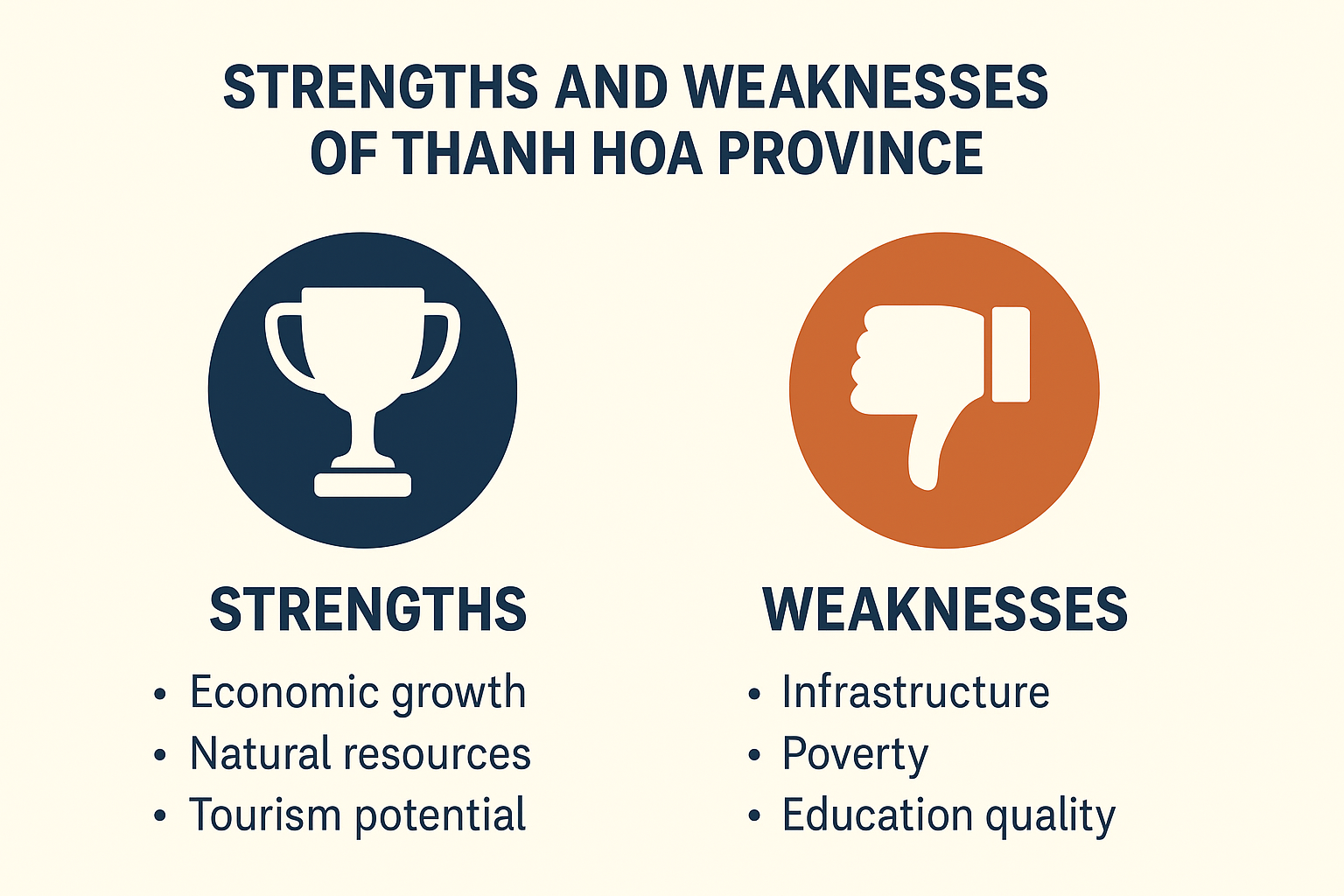
Strengths and Weaknesses of Thanh Hoa Province – Detailed Analysis
Th12
Thanh Hoa is a province with strong economic potential and a strategic position in Vietnam. However, it also faces several challenges in the process of development. The following article provides a comprehensive analysis of Thanh Hoa’s strengths, weaknesses, and future prospects.
1. Strengths of Thanh Hoa
1.1. Strategic Geographic Location
Thanh Hoa serves as a gateway connecting the North with the Central and Southern regions of Vietnam. It has a well-developed transportation system including:
-
Roads and highways
-
Railway
-
Seaports
-
Tho Xuan Airport
Its long coastline also offers advantages for tourism, marine economy, and logistics development.
1.2. Abundant Natural Resources
Land: Large natural area with diverse terrain (plains, midlands, mountains), suitable for high-tech agriculture and forestry.
Sea: Famous beaches such as Sam Son and Hai Tien, as well as great potential for:
-
Deep-water seaports (Nghi Son Economic Zone)
-
Aquaculture and seafood exploitation
-
Marine tourism
1.3. Large Labor Force
Thanh Hoa has one of the largest populations in Vietnam, providing:
-
Abundant workforce
-
A growing consumer market
-
Advantages for labor-intensive industries
1.4. Rapidly Developing Infrastructure
Major projects in the Nghi Son Economic Zone have significantly improved local infrastructure, industrial zones, and logistics systems.
1.5. Attractive Investment Environment
The province offers multiple incentives to investors and has successfully attracted strong FDI inflows in recent years.
1.6. Strong Support From the Central Government
Thanh Hoa is one of the few provinces with a dedicated Resolution from the Politburo for development toward 2030 with a vision to 2045—showing its strategic importance.
2. Weaknesses and Challenges
2.1. Workforce Quality Not Yet High
Although the labor force is large, the percentage of skilled workers remains limited, requiring further investment in vocational training and education.
2.2. Frequent Natural Disasters
Its geographical position makes Thanh Hoa vulnerable to:
-
Storms
-
Flooding
-
Landslides
These events affect both production and daily life.
2.3. Infrastructure Still Uneven in Certain Areas
Remote, mountainous, and rural regions still lack:
-
Comprehensive transportation systems
-
Industrial infrastructure
-
Public services
2.4. Dependence on Traditional Economic Sectors
Economic restructuring has improved but still requires more effort to increase productivity and added value through high-tech and service sectors.
2.5. Slow Public Investment Disbursement
At times, public investment projects progress slowly, affecting:
-
Infrastructure development
-
Investment attraction
-
Socio-economic growth
3. Conclusion
Thanh Hoa has all the necessary conditions to become a new growth engine of the Northern region, especially in marine economy and industry. Overcoming weaknesses and maximizing strengths will be key to sustainable development in the future.
Frequently Asked Questions (FAQ)
1. What makes Thanh Hoa attractive to investors?
Its strategic location, developed infrastructure, favorable policies, and the Nghi Son Economic Zone.
2. Which sectors have the highest development potential in Thanh Hoa?
Industry, energy, tourism, high-tech agriculture, and logistics.
3. What challenges does Thanh Hoa face?
Skilled labor shortage, natural disasters, and uneven infrastructure development.