

Should you invest in the North or the South of Vietnam over the next 10 years?
Th8
The decision to invest in the North or South of Vietnam over the next decade depends on your business sector, development goals, and market factors. Here’s a comparative analysis to help you decide:
🔍 1. Southern Vietnam – Ho Chi Minh City, Binh Duong, Dong Nai
✅ Advantages:
-
Leading economic center: HCMC contributes nearly 22% of the national GDP.
-
Well-developed infrastructure, especially seaports (Cat Lai, Cai Mep – Thi Vai), Tan Son Nhat Airport, expressways.
-
Abundant, dynamic, and highly skilled labor force.
-
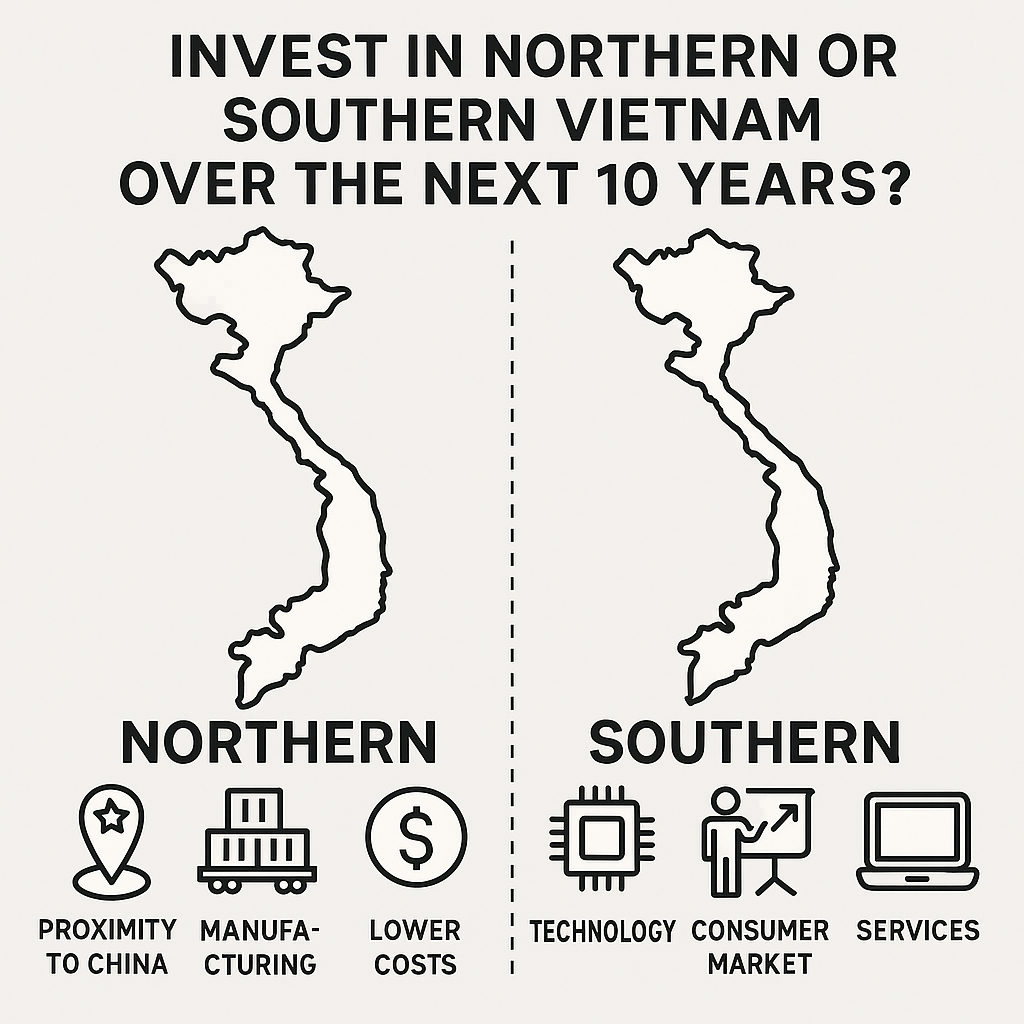
Large consumer market, easier customer access.
-
Vibrant startup and high-tech ecosystem.
❌ Disadvantages:
-
Higher costs for land and labor compared to the North.
-
Overloaded urban traffic, frequent congestion.
-
Fierce competition from both domestic and international businesses.
🌄 2. Northern Vietnam – Hanoi, Bac Ninh, Hai Phong, Quang Ninh
✅ Advantages:
-
Strategic location near China, ideal for import-export, especially manufacturing and logistics.
-
Rapidly developing infrastructure: expressways, Hai Phong port, Van Don international airport, industrial parks in Bac Ninh, Hai Duong…
-
Lower investment costs (labor, land).
-
Strong FDI attraction in northern industrial zones (Samsung, Foxconn, LG, Amkor…).
❌ Disadvantages:
-
Smaller domestic consumer market than HCMC.
-
Less vibrant startup ecosystem than the South.
-
Workforce tends to be less dynamic and flexible.
📈 Industry-based Recommendation:
| Industry | Best Region |
|---|---|
| Manufacturing, logistics, supporting industries | North |
| Technology, software, creative services | South |
| E-commerce, retail | South |
| Export to China | North |
| Industrial real estate | North |
| Education, consumer services | South |
🧭 Conclusion:
-
For manufacturing, exports, logistics, or industrial real estate → The North is a strategic choice.
-
For services, technology, consumer markets, or startups → The South offers clear advantages.
Let us know your specific business area for more tailored advice.