

Should You Buy a New Reach Truck?
Th3
In modern warehouses, especially logistics and e-commerce warehouses, Reach Truck forklifts are becoming increasingly popular. However, many businesses still wonder whether it is worth investing in a new reach truck and whether this type of forklift is suitable for their warehouse operations.
This article will help you understand the advantages, disadvantages, and the situations where investing in a reach truck makes sense.
What is a Reach Truck?
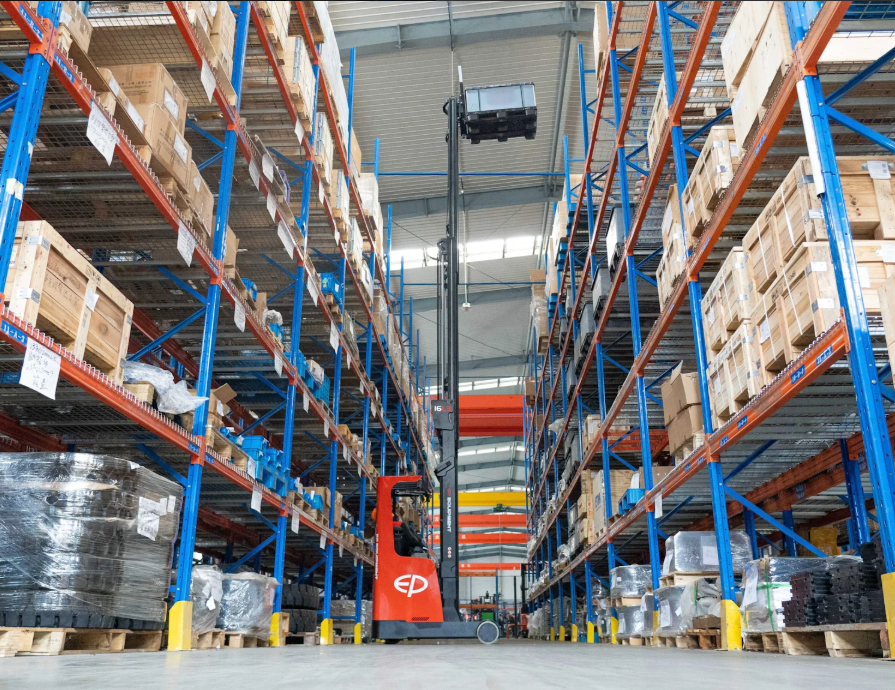
A reach truck is a type of electric forklift designed specifically for high racking systems and narrow aisles.
Its main feature is the extendable mast mechanism, which allows the forks to reach forward and retrieve pallets stored deep inside racking systems.
Compared to standard counterbalance forklifts, reach trucks can:
-
Lift goods to heights of 6–12 meters
-
Operate in narrow warehouse aisles
-
Maximize warehouse storage capacity
They are commonly used in logistics warehouses, manufacturing facilities, and e-commerce fulfillment centers.
Advantages of Reach Trucks
1. High lifting capability
Reach trucks are designed for warehouses with high racking systems. Depending on the model, they can lift pallets to 8m, 10m, or even more than 12m.
This allows businesses to:
-
Utilize vertical warehouse space
-
Increase pallet storage capacity
-
Reduce warehouse floor space usage
2. Suitable for narrow aisles
One of the biggest advantages of reach trucks is their ability to operate in narrow aisles.
Typically:
-
Reach trucks require 2.5 – 2.8 meters aisle width
-
Counterbalance forklifts require 3.5 – 4 meters
This helps warehouses increase storage density and improve space utilization.
3. Electric operation and low operating cost
Reach trucks are electric forklifts, offering several benefits:
-
No exhaust emissions
-
Low noise
-
Lower energy costs
-
Reduced maintenance expenses
They are ideal for indoor warehouses, cold storage facilities, and manufacturing plants.
4. Safe and precise operation
Reach trucks are equipped with:
-
electronic control systems
-
ergonomic steering
-
stability systems
These features allow operators to stack pallets at high levels safely and accurately.
When should you buy a new reach truck?
Buying a new reach truck is a good choice if your warehouse has the following conditions:
High racking systems
If your warehouse uses racks 6 meters or higher, reach trucks are a very effective solution.
Narrow warehouse aisles
Modern logistics warehouses often design narrow aisles to increase storage density. Reach trucks are specifically built for this environment.
Indoor warehouse operations
Reach trucks perform best on smooth indoor concrete floors.
Suitable environments include:
-
logistics warehouses
-
e-commerce warehouses
-
manufacturing facilities
-
cold storage warehouses
Long-term investment
A new reach truck provides:
-
new battery systems
-
higher reliability
-
service life of 5–10 years
When should you NOT buy a reach truck?
Not every warehouse is suitable for this type of forklift.
Outdoor or rough surfaces
Reach trucks have small wheels and low ground clearance, making them unsuitable for:
-
outdoor yards
-
uneven floors
-
sloped surfaces
Heavy loads
Most reach trucks have a capacity of around:
-
1.5 – 2.5 tons
For heavier loads, counterbalance forklifts or diesel forklifts may be more suitable.
Mixed indoor and outdoor operations
If goods frequently move between outdoor yards and indoor warehouses, reach trucks may not be the best option.
Should you buy a new or used reach truck?
Buy new if:
-
warehouse operates multiple shifts
-
high reliability is required
-
long-term investment is planned
Buy used if:
-
budget is limited
-
usage is relatively low
However, used reach trucks often have issues with mast systems, drive motors, or electrical components.
Conclusion
Reach trucks are an excellent material handling solution for modern warehouses. However, businesses should only invest when the warehouse conditions are suitable.
You should consider buying a reach truck if:
-
the warehouse has high racking systems
-
aisles are narrow
-
operations are indoors
-
pallet loads are under 2.5 tons
Otherwise, a counterbalance forklift may be a better option.