

Key Specifications When Choosing an Electric Stacker Forklift
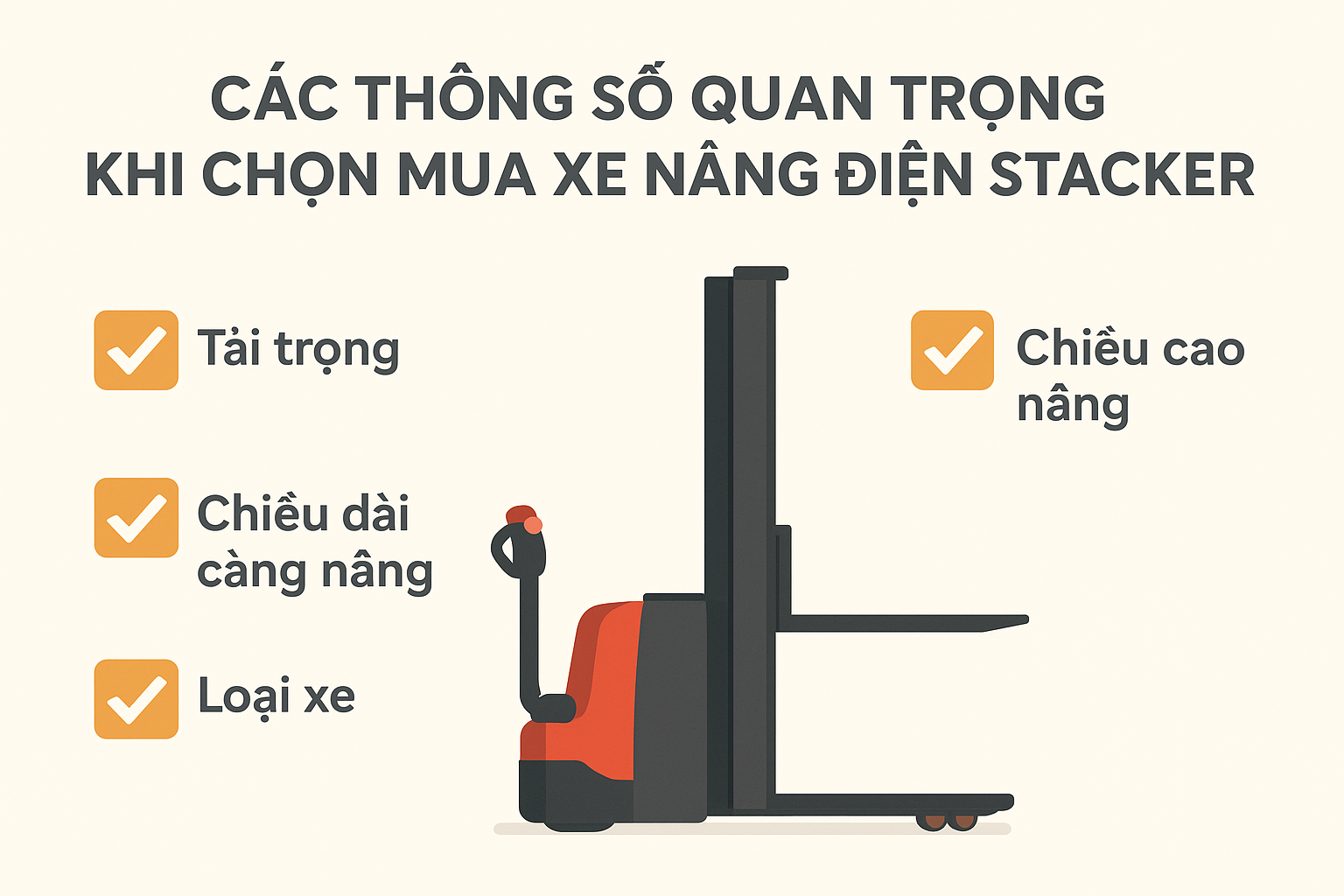
Th9
Key Specifications When Choosing an Electric Stacker Forklift
Introduction
Electric stacker forklifts are increasingly being used by businesses in warehouses and factories thanks to their smooth operation, cost savings, and environmental friendliness. However, to choose the right electric stacker, you need to understand the key technical specifications. This article will help you explore the important factors to consider before making an investment decision.
1. Load Capacity
-
This is the most important factor when buying a forklift.
-
Electric stackers usually have a load capacity from 1 ton to 2 tons.
-
If goods are often close to the maximum load, you should choose a stacker with a capacity 10–20% higher to ensure durability and safety.
2. Lift Height
-
Common stacker models offer lifting heights from 2.5m to 6m.
-
The lift height must match your racking system and warehouse layout.
-
Note: The higher you lift, the lower the safe load capacity becomes. Always refer to the Load Chart for each model.
3. Fork Length
-
Standard size is 1150 mm, suitable for Euro pallets.
-
Other options include 1220 mm or shorter, depending on pallet type (single-face or double-face).
4. Pallet Type
-
Single-face pallets (common in Vietnam) → compatible with most stackers.
-
Double-face pallets → require a wide-leg stacker or a reach truck.
5. Battery & Power Source
-
Lead-acid battery: low cost, requires regular water refilling, lifespan about 2–3 years.
-
Lithium-ion battery: fast charging (only 2 hours), lifespan 5–7 years, low maintenance.
-
Battery capacity (Ah) determines working hours per day.
6. Overall Dimensions & Turning Radius
-
Stacker forklifts are suitable for narrow aisles, usually requiring at least 2.2–2.8m.
-
Always measure your actual aisle space before purchasing.
7. Lifting & Travel Speed
-
Stronger motors allow faster lifting and smoother movement, improving productivity.
-
This factor is crucial for businesses operating multiple shifts daily.
8. Safety Features
-
Automatic braking system.
-
Anti-rollback sensor when stopping on slopes.
-
Emergency stop button and safety horn.
9. Brand & After-sales Service
-
Reputable brands: EP Equipment, Toyota, Linde, Heli, Noblelift…
-
Choose suppliers with reliable warranty services and spare parts availability to ensure continuous operation.
Conclusion
When choosing an electric stacker forklift, focus on: load capacity, lift height, pallet type, battery, warehouse space, and after-sales service. Identifying your actual needs will help you invest effectively, save costs, and ensure safe operations.
👉 If you are unsure which model to choose, contact us today for detailed consultation and comparison of different electric stacker forklifts suitable for your warehouse.