

How to Check Whether a Sit-Down Electric Forklift Has a Faulty Controller
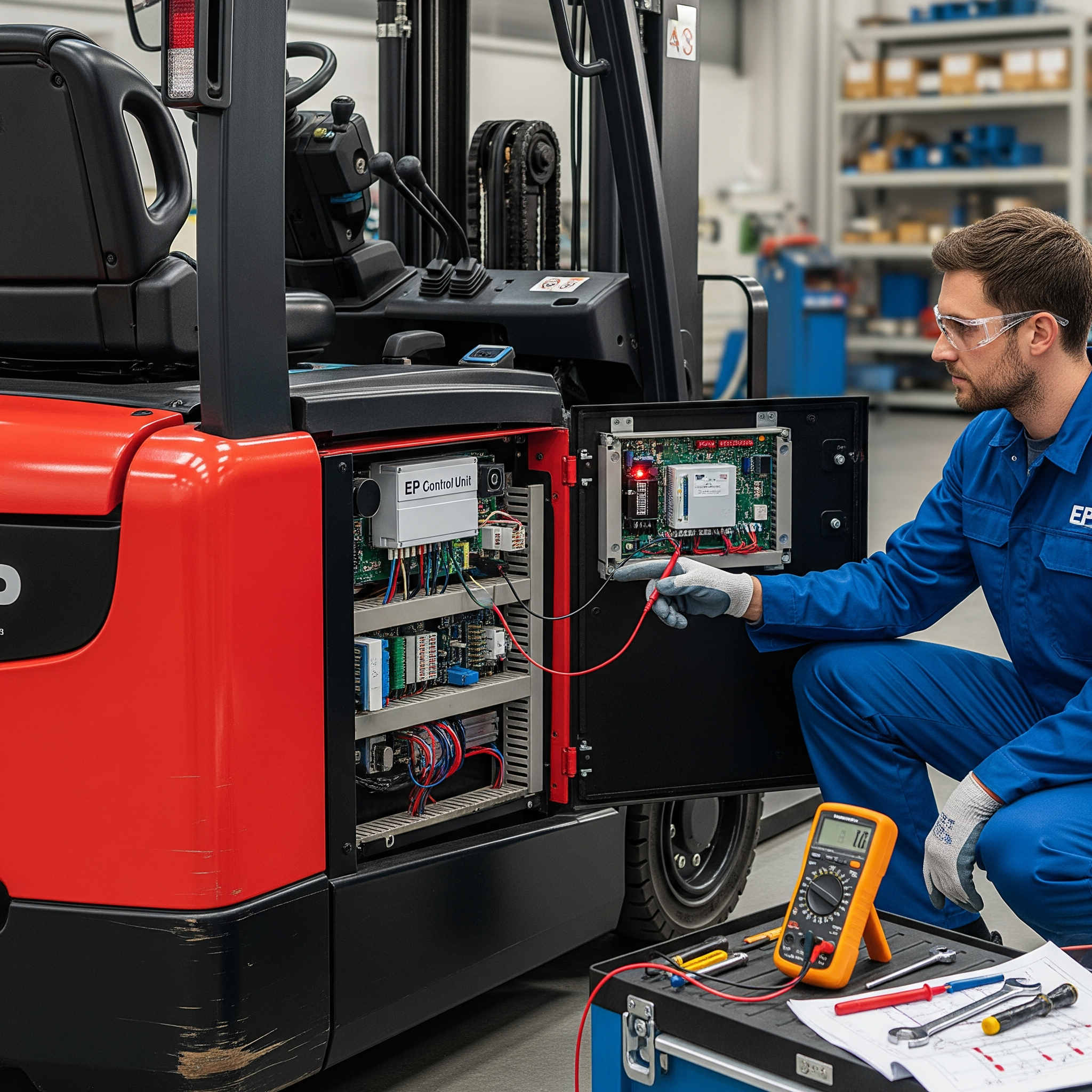
Th12
1. Signs That the Controller May Be Faulty
-
The forklift has power but does not move or works intermittently
-
No error is displayed, but pressing the accelerator has no response
-
Unusual error codes appear on the display and cannot be cleared by reset
-
Battery, motor, and switches are all normal, but the forklift still does not work
-
Loss of drive, forward/reverse, or lifting functions despite stable voltage
👉 After excluding battery, motor, and switches, the controller is very likely faulty.
2. Controller Inspection Procedure for Electric Forklifts
Step 1: Check Power Supply to the Controller
-
Measure battery voltage at B+ / B- terminals on the controller
-
48V systems should read approx. 50–54V, 80V systems approx. 83–90V
❌ If no voltage reaches the controller, it is not yet considered a controller failure
Step 2: Check Fuses and Main Contactor
-
Inspect power fuses and control fuses
-
Check whether the main contactor pulls in
👉 If the contactor does not engage, the fault is external, not the controller
Step 3: Check Accelerator Signal
-
Measure accelerator signal voltage (typically 0.8–4.2V)
-
If the signal is present but the forklift does not move → suspect controller failure
Step 4: Observe Controller Indicator Lights
-
No LED lights despite power → internal controller power failure
-
Flashing LEDs → check manufacturer error code chart
-
LED normal but no output to motor → power stage failure
Step 5: Check Motor Output Signal
-
Measure voltage at the motor terminals while pressing the accelerator
❌ No output voltage → controller is faulty
Step 6: Replace with a Known-Good Controller (Most Accurate Method)
-
Install a controller with same model and specifications
-
If the forklift works normally → controller confirmed faulty
3. Common Causes of Controller Failure
-
Weak or unstable battery voltage causing IGBT damage
-
Water ingress, moisture, or oxidized terminals
-
Incorrect battery polarity connection
-
Charger malfunction causing electrical surges
-
Continuous overload operation
Q&A – Frequently Asked Questions
Q: The forklift has power but does not move. Is the controller definitely faulty?
A: Not necessarily. Battery, contactor, accelerator, and safety switches must be checked first.
Q: Can an electric forklift controller be repaired?
A: Minor electronic damage may be repairable, but severe damage usually requires replacement.
Q: Does the controller need programming after replacement?
A: Many models require software setup and parameter configuration (EP, Curtis, ZAPI, etc.).