

Detailed Structure of Diesel Forklift Starter Motor & How It Works
Th12
What Is a Diesel Forklift Starter Motor?
A diesel forklift starter motor is an electrical device that uses power from the battery to rotate the engine’s crankshaft, allowing the diesel engine to start. If the starter motor fails, the forklift will not start or will crank very weakly.
Most diesel forklifts use 12V or 24V starter motors, depending on the model.
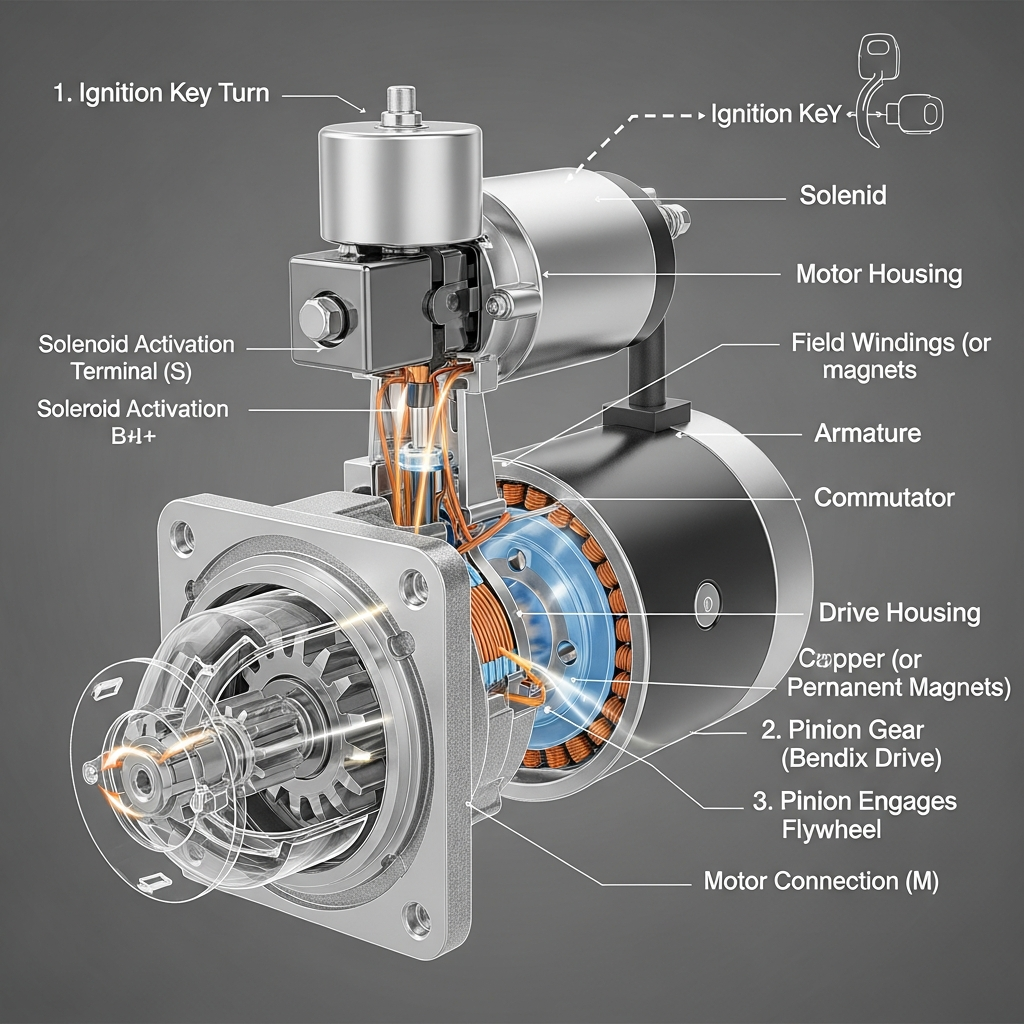
Detailed Structure of a Diesel Forklift Starter Motor
1. Starter Motor Housing
-
Made of aluminum or cast iron
-
Functions:
-
Protects internal components
-
Dissipates heat
-
Secures the starter motor to the engine block
-
2. Starter Motor (Electric Motor)
The main power-generating component, including:
Armature (Rotor)
-
The rotating part of the motor
-
Converts electrical energy into mechanical energy
-
Easily damaged if cranked too long or too frequently
Stator (Field Coil / Permanent Magnet)
-
Generates the magnetic field for rotation
-
Available in field coil type or permanent magnet type
3. Carbon Brushes & Commutator
-
Transfer electrical current from the battery to the motor
-
Common issues:
-
Worn carbon brushes
-
Burnt commutator
-
Carbon dust causing poor contact
-
👉 This is a common reason why the forklift cranks weakly or intermittently
4. Starter Solenoid (Relay)
-
Performs two main functions:
-
Supplies power to the starter motor
-
Pushes the pinion gear to engage with the flywheel
-
Internal components include:
-
Pull-in coil
-
Hold-in coil
-
Iron plunger
-
Copper contacts
👉 This is the most failure-prone component of the starter motor
5. Pinion Gear
-
Mounted on the starter shaft
-
Engages directly with the engine flywheel
-
Worn or damaged teeth cause cranking noise without engine start
6. One-Way Clutch (Bendix Drive)
-
Transfers torque from the starter motor to the flywheel
-
Prevents reverse rotation from damaging the motor
-
Common failures:
-
Slipping
-
Grease contamination
-
Internal wear
-
7. Bearings / Bushings
-
Keep the starter shaft aligned and stable
-
Worn bearings may cause:
-
Loud cranking noise
-
Shaft vibration
-
Rapid gear wear
-
Working Principle of a Diesel Forklift Starter Motor
-
Turn the ignition key → solenoid is activated
-
Pinion gear engages with the flywheel
-
Starter motor rotates → engine starts
-
Release the key → pinion gear retracts automatically
Signs of a Faulty Diesel Forklift Starter Motor
-
Clicking sound but no rotation
-
Weak cranking
-
Starter spins but does not engage
-
Overheating or burning smell
-
Multiple attempts needed to start
Tips to Prevent Starter Motor Failure
-
Do not crank for more than 5–7 seconds per attempt
-
Wait 20–30 seconds between attempts
-
Check battery condition regularly
-
Clean brushes and commutator every 6–12 months
Frequently Asked Questions (FAQ)
Q: What voltage does a diesel forklift starter motor use?
A: Typically 12V or 24V, depending on the forklift model.
Q: The forklift clicks but does not start—what is the problem?
A: Possible causes include a faulty solenoid, worn brushes, slipping Bendix, or weak battery.
Q: Can a diesel forklift starter motor be repaired?
A: Yes. Components such as brushes, solenoid, bearings, and Bendix can be repaired or replaced.
Q: How often should the starter motor be checked?
A: Every 6–12 months, or whenever weak cranking occurs.
Q: When should the starter motor be replaced instead of repaired?
A: When the motor is severely burnt, the shaft is bent, or repair costs are close to replacement cost.