

How Many Hours Can an Electric Stacker Forklift Operate?
Th5
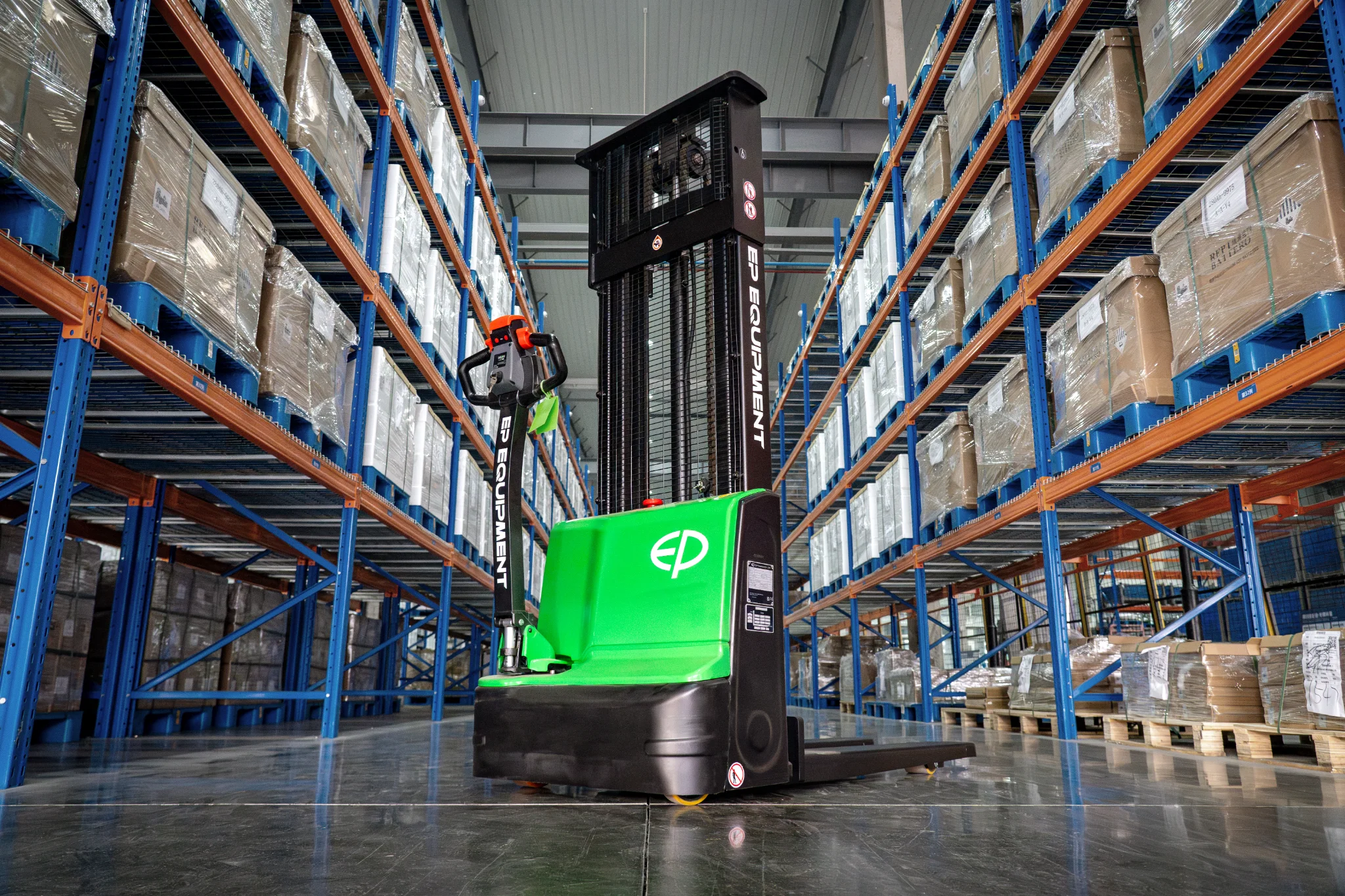
Electric stacker forklifts are widely used in warehouses, factories, and logistics operations thanks to their quiet operation, energy savings, and ease of use. However, many buyers often ask: how many hours can an electric stacker forklift work after a full charge?
In reality, the operating time depends on several factors such as battery type, battery capacity, lifting load, and working intensity.
Average Operating Time of Electric Stackers
Normally:
- Electric stackers with lead-acid batteries can operate continuously for about 4–6 hours.
- Lithium battery stackers usually work for 6–10 hours.
- If used intermittently in warehouses, some models can last nearly a full working day.
Modern stackers are designed with better energy-saving systems, allowing longer operating times than older models.
Factors Affecting Operating Time
1. Battery Capacity
The larger the battery capacity, the longer the forklift can operate. For example:
- A 24V/100Ah battery can typically run for around 5–7 hours.
- A 24V/210Ah battery may support nearly one full work shift.
Battery capacity is one of the most important factors affecting operating duration.
2. Battery Type
Lead-Acid Battery
- Lower purchase cost.
- Longer charging time.
- Requires regular maintenance and water refilling.
Lithium Battery
- Faster charging speed.
- Longer lifespan.
- Longer continuous operating time.
- No need for water maintenance.
Today, many businesses prefer lithium battery stackers because they reduce downtime and improve efficiency.
Heavy or Light Working Conditions
If the forklift frequently:
- lifts heavy loads,
- operates continuously,
- works long hours,
- travels long distances,
the battery will drain faster.
On the other hand, forklifts used for light-duty warehouse work can operate much longer after each charge.
Why Does a Forklift Battery Drain Quickly?
Some common reasons include:
- Aging or weak batteries.
- Incorrect or low-quality chargers.
- Frequent overloading.
- Worn electrical or motor systems.
- Rough warehouse floors causing higher power consumption.
If an old electric stacker loses power quickly after charging, the battery condition should be inspected.
How to Extend Battery Life
To improve battery lifespan and operating time:
- Charge the battery properly.
- Avoid fully draining the battery before charging.
- Do not use the forklift while charging.
- Regularly check water levels for lead-acid batteries.
- Maintain the electrical system regularly.
Proper maintenance helps the forklift operate more efficiently and reduces repair costs.
Should You Choose a Lithium Battery Stacker?
If your business:
- operates multiple shifts,
- requires fast charging,
- wants to reduce downtime,
- aims to lower maintenance costs,
then a lithium battery stacker is an excellent choice.
Although the initial investment is higher, long-term operating costs are usually lower.
Conclusion
Electric stacker forklifts typically operate between 4 and 10 hours depending on the battery type and working conditions. Lithium batteries generally provide longer operating time and higher efficiency than traditional lead-acid batteries.
Before purchasing a stacker forklift, users should carefully consider:
- battery capacity,
- battery type,
- actual working requirements,
- daily operating hours,
to choose the most suitable model and optimize operating costs.