

Why Does an Old Forklift Take a Long Time to Charge but the Battery Still Won’t Show Full?
Th5
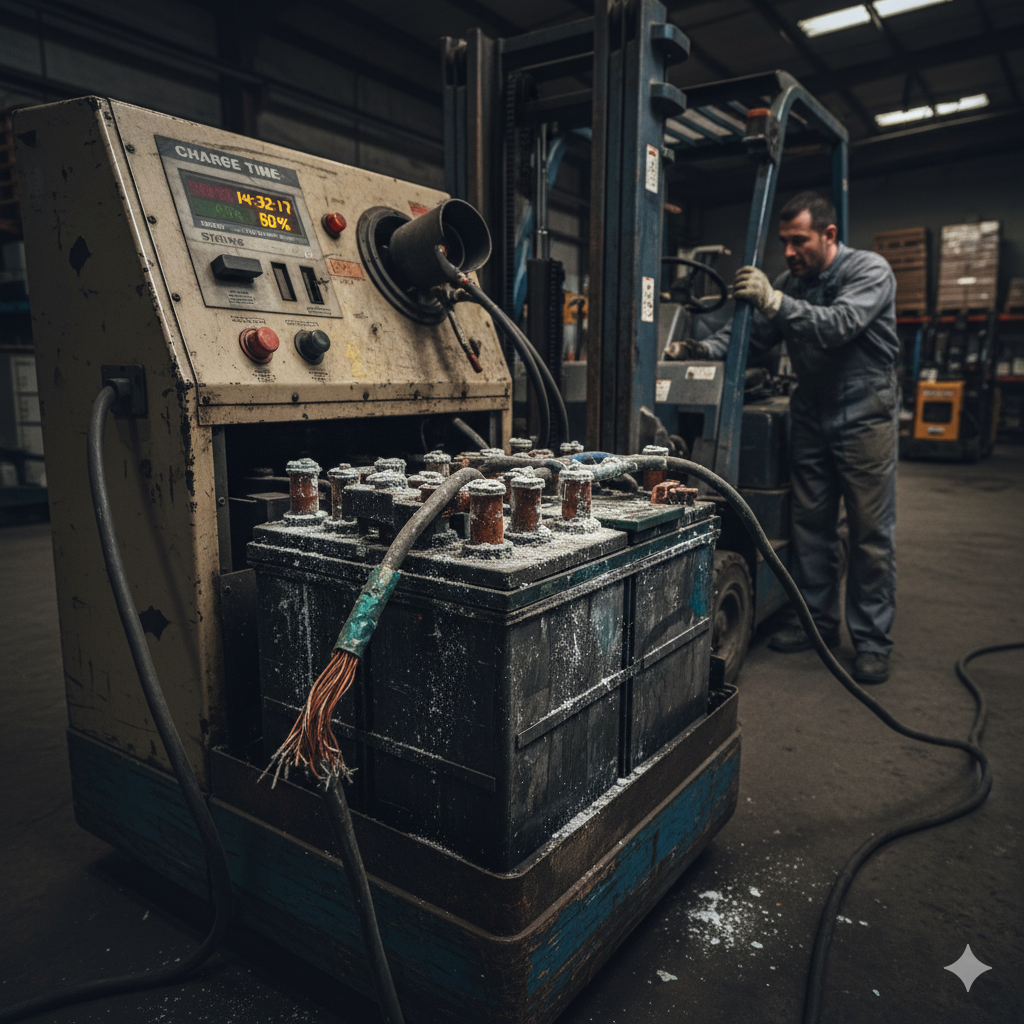
Old electric forklifts often experience a problem where the charger is connected for many hours, but the battery indicator still does not show fully charged. This is a common issue in used reach trucks, pallet stackers, and second-hand Japanese forklifts. If not repaired early, it can reduce battery lifespan and affect working performance.
1. The Forklift Battery Is Worn Out
The most common reason is an aging battery.
Lead-acid forklift batteries usually last around 3–5 years. When the battery becomes weak:
- Charging capacity decreases
- Charging time becomes longer
- Voltage cannot reach the standard level
- The charger cannot detect a full charge
Common signs:
- Charging for many hours without reaching full
- Battery drains quickly during operation
- Weak lifting power
- Battery becomes hot while charging
2. One or More Battery Cells Are Damaged
A forklift battery pack consists of multiple cells connected together. If only one cell becomes weak or damaged, the entire battery pack may fail to charge fully.
This can cause:
- Continuous charging without auto stop
- Unstable voltage
- Poor forklift performance
This problem is common in old imported forklifts.
3. Low Distilled Water Level
For lead-acid batteries, distilled water is very important for charging and discharging.
If the water level is low:
- The battery overheats
- Charging becomes slower
- Battery performance decreases
- Sulfation can occur on battery plates
Many forklift users forget to check water levels regularly, causing premature battery damage.
4. Weak or Incorrect Charger
A weak charger can also cause slow charging and incomplete charging.
Common cases include:
- Old charger with reduced performance
- Internal charger components damaged
- Wrong charger voltage
- Charger not suitable for the forklift model
For example:
- Using a 36V charger for a 48V battery
As a result, the battery charges very slowly or never reaches full capacity.
5. Corroded Charging Plug or Wiring
Over time, the charging connector may become:
- Burned
- Loose
- Rusted
- Overheated
This reduces charging efficiency and leads to:
- Extremely long charging times
- Battery not showing full
- Electrical issues
6. Faulty Battery Indicator or Controller Board
Sometimes the battery is actually full, but the display system shows incorrect information.
Possible causes:
- Faulty battery meter
- Damaged controller board
- Voltage sensor malfunction
A voltage test is needed to confirm the real battery condition.
7. Forklift Left Unused for Too Long
Electric forklifts that sit unused for long periods without charging may develop:
- Battery sulfation
- Dead cells
- Reduced charging capacity
This is very common in used forklifts stored for a long time.
How to Check a Forklift That Won’t Fully Charge
You should inspect:
- Total battery voltage
- Individual battery cells
- Distilled water level
- Battery temperature during charging
- Charger output current
- Charging plugs and wiring
If you are not experienced, it is best to contact a forklift technician for inspection.
Conclusion
An old forklift that charges for a long time but still does not show full battery is usually caused by:
- Worn-out batteries
- Weak or damaged cells
- Faulty charger
- Low distilled water
- Electrical system problems
Regular maintenance can help extend battery life, reduce repair costs, and keep the forklift operating efficiently.