

Electric Motor Structure – Detailed Component Analysis (With Illustration)
Th12
Electric motors are the core power components of electric forklifts and many industrial machines. Understanding the structure, function, and failure symptoms of each motor part helps technicians diagnose faults accurately and repair efficiently.
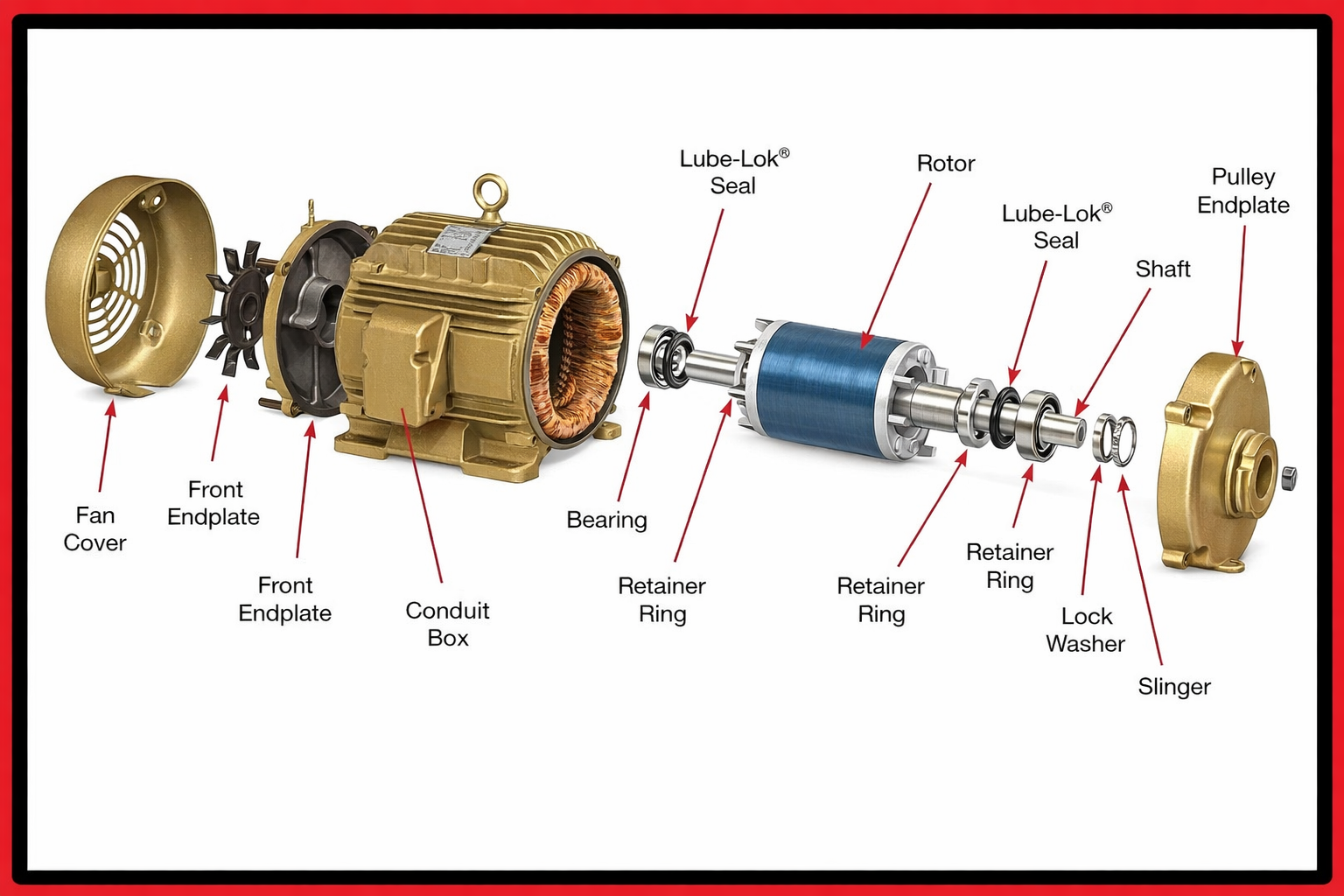
Based on the illustrated motor structure above, this article provides a step-by-step breakdown of each component from outside to inside.
1. Fan Cover
Function:
-
Protects the cooling fan
-
Prevents dust and foreign objects from entering
-
Ensures operator safety
Common issues:
-
Cracks or deformation → reduced cooling
-
Dust buildup → overheating
2. Cooling Fan
Function:
-
Generates airflow to cool rotor and stator
-
Maintains stable motor temperature under load
Failure signs:
-
Abnormal motor heat
-
Noise or vibration
-
Motor thermal shutdown
3. Front Endplate
Function:
-
Supports the motor shaft
-
Holds the bearing in position
-
Connects motor housing and shaft
Common faults:
-
Misalignment → bearing wear
-
Cracks → excessive vibration
4. Conduit Box (Terminal Box)
Function:
-
Electrical connection point
-
Protects wiring from dust and moisture
Typical problems:
-
Oxidized terminals
-
Loose connections → unstable operation
-
Water ingress → short circuit
5. Stator (Motor Windings)
Function:
-
Creates rotating magnetic field
-
Stationary part of the motor
Common failures:
-
Burnt windings
-
Ground fault
-
Phase loss (3-phase motors)
👉 This is a serious failure with high repair cost.
6. Bearing
Function:
-
Ensures smooth shaft rotation
-
Reduces friction
Bearing failure symptoms:
-
Grinding noise
-
Strong vibration
-
Shaft overheating
👉 Delayed replacement may cause motor burnout.
7. Rotor
Function:
-
Rotating part of the motor
-
Converts magnetic force into mechanical motion
Common issues:
-
Rotor burnout
-
Bent shaft
-
Worn shaft journals
8. Shaft
Function:
-
Transmits power to gearbox, wheels, or hydraulic pump
Typical faults:
-
Bent shaft → vibration
-
Worn keyway → slipping
9. Lube-Lok Seal (Oil Seal)
Function:
-
Prevents grease leakage
-
Blocks dust and water
Seal failure results in:
-
Loss of lubrication
-
Rapid bearing damage
10. Retainer Ring – Lock Washer – Slinger
Functions:
-
Secure rotating components
-
Prevent axial movement
-
Control grease dispersion
11. Pulley Endplate
Function:
-
Power output end
-
Mounting point for pulley or coupling
Why Understanding Motor Structure Matters
-
Accurate fault diagnosis
-
Avoid unnecessary motor replacement
-
Reduce downtime
-
Lower maintenance costs
Frequently Asked Questions (Q&A)
Q: Why does the forklift motor make loud noise during operation?
A: Usually caused by worn bearings, damaged fan, or misaligned rotor.
Q: The motor has power but does not rotate. Why?
A: Possible reasons include burnt stator windings, seized rotor, or controller failure.
Q: Is rapid motor overheating dangerous?
A: Yes. Common causes include fan failure, damaged seals, or overload. If not repaired promptly, it may lead to motor burnout.
Q: When should the motor be repaired vs. replaced?
A:
-
Repair: bearings, seals, wiring, fan
-
Replace: severe winding or rotor damage
Q: How often should an electric forklift motor be serviced?
A:
-
Every 6 months for normal use
-
Every 3 months in dusty or humid environments