

Signs of a Faulty Electric Motor – How to Detect Early to Avoid Serious Damage
Th12
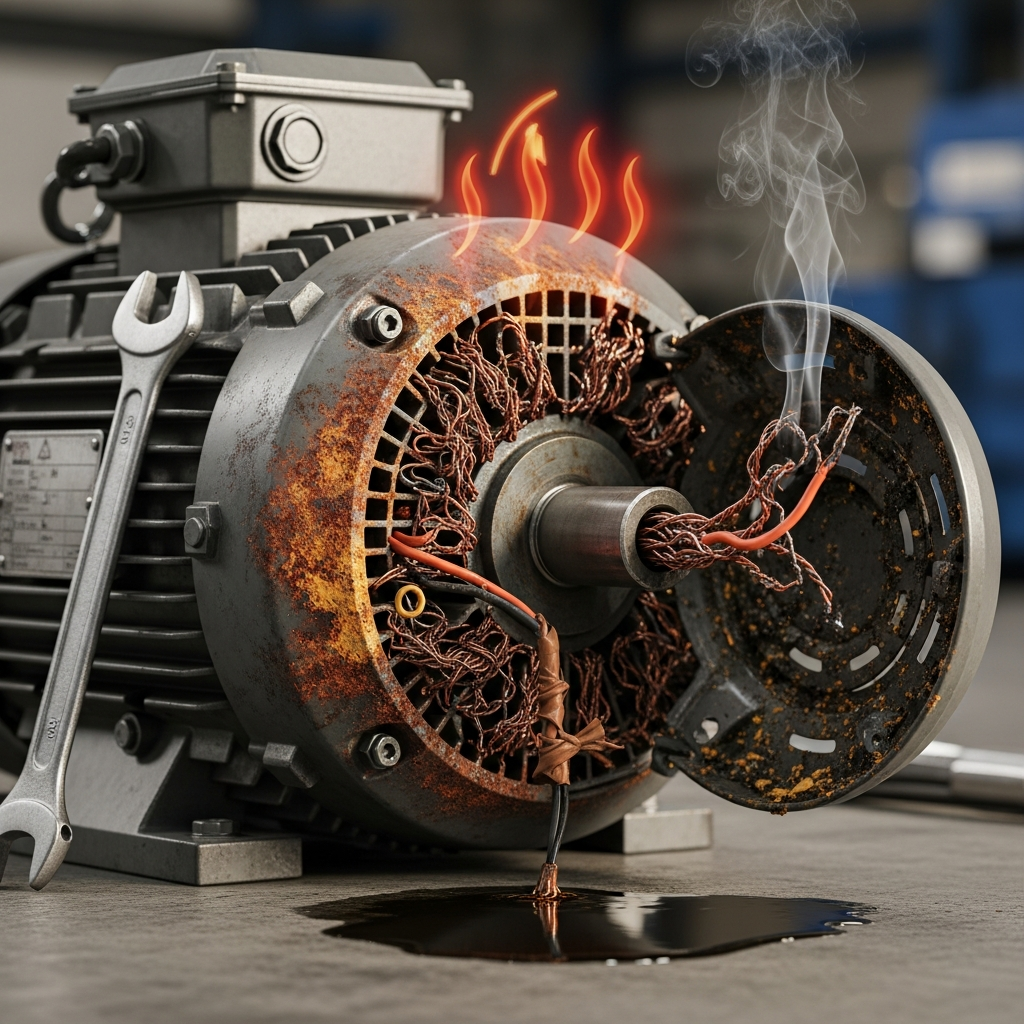
An electric motor is a critical component that determines the operating performance of electric forklifts and industrial equipment. When a motor fails, the machine may run weakly, stop working, or even cause damage to the controller, battery, or electrical system. Detecting motor problems early helps reduce repair costs and avoid unexpected downtime.
Common Signs of a Faulty Motor
1. Motor Does Not Run or Runs Weakly
-
Power is supplied but the motor does not rotate
-
Motor runs slowly, jerks, or lacks torque
Possible causes:
-
Burnt motor windings
-
Seized or damaged bearings
-
Rotor rubbing against the stator
2. Motor Overheats Abnormally
-
Motor becomes very hot in a short time
-
Burning or melted insulation smell
Common causes:
-
Shorted windings
-
Long-term overload
-
Bearing failure causing excessive friction
3. Excessive Sparking
(Common in DC motors with carbon brushes)
-
Strong sparks at the commutator
-
Brushes wear out quickly
Possible causes:
-
Worn or burnt commutator
-
Poor-quality carbon brushes
-
Rotor winding short circuit
4. Loud or Abnormal Noise
-
Loud noise during startup
-
Noise increases with speed
Typical reasons:
-
Worn bearings
-
Bent motor shaft
-
Foreign objects inside the motor
5. Motor Stops Automatically While Running
-
Runs for a while then stops
-
Works again after cooling down
Likely causes:
-
Motor overheating
-
Thermal protection activated
-
Aging or damaged windings
6. Motor Trips Circuit Breaker or Blows Fuse
-
Circuit breaker trips immediately when powered on
Causes:
-
Short-circuited windings
-
Ground leakage
-
Damaged insulation
7. Abnormal Resistance Measurement
-
Uneven resistance between phases
-
Insulation resistance leakage to motor frame
👉 This clearly indicates the motor is damaged or close to failure.
Quick Motor Inspection Checklist
-
Rotate the shaft by hand to check for stiffness
-
Run the motor without load and listen for noise
-
Measure phase resistance
-
Measure insulation resistance to the motor body
-
Check motor temperature after 5–10 minutes of operation
Frequently Asked Questions (Q&A)
Q: Why does the motor have power but not run?
A: Common causes include burnt windings, seized bearings, worn brushes (DC motors), or internal short circuits.
Q: Does a hot motor always mean it is faulty?
A: Not always. Slight warmth is normal, but rapid overheating with a burning smell usually indicates internal damage.
Q: Should a noisy motor be replaced immediately?
A: If noise is caused by bad bearings, replacing bearings may be enough. If caused by winding damage or shaft deformation, motor repair or replacement is recommended.
Q: How can I tell if the motor or controller is faulty?
A: Run the motor independently. If it still runs weakly or overheats, the motor is faulty. If it runs normally, check the controller.
Q: How long does an electric forklift motor usually last?
A: Typically 4–7 years, depending on workload, operating environment, and maintenance.
Conclusion
A faulty motor usually shows clear signs such as overheating, abnormal noise, weak rotation, sparking, or tripping circuit breakers. Early detection helps prevent serious damage and reduces repair costs.