

Lifespan of Lead-Acid Batteries
Th12
1. Overview
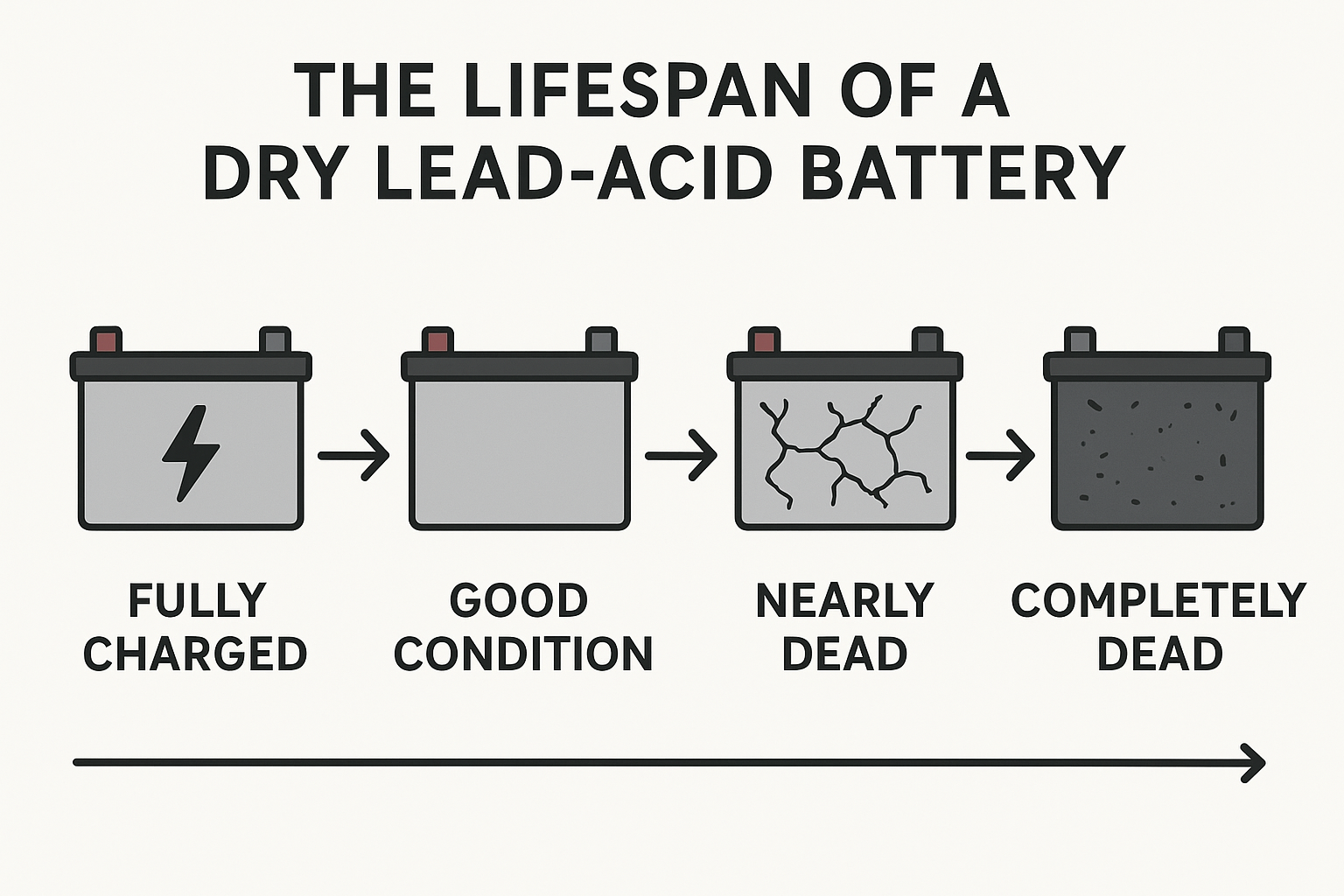
The lifespan of a lead-acid battery is not measured in months or years, but by the number of charge–discharge cycles it can handle. Each use and recharge counts as one cycle. The more cycles a battery endures, the longer it lasts.
This article explains:
-
Factors that affect battery lifespan
-
Warning signs of a failing battery
-
How to properly maintain and extend battery life
2. Factors That Affect Lead-Acid Battery Lifespan
2.1. Product Quality
Batteries from reputable brands typically offer longer lifespan due to better materials and manufacturing processes.
2.2. Depth of Discharge (DoD)
-
The deeper the discharge, the shorter the lifespan.
-
Keep DoD below 50% for optimal battery life.
Letting the battery run too low before recharging will significantly reduce cycle life.
2.3. Charging Habits
Charging behavior directly impacts battery health:
-
Overcharging: causes overheating, water loss, and plate damage.
-
Undercharging: leads to sulfation, reducing performance.
➡️ Use a proper charger with automatic cut-off.
2.4. Temperature Conditions
Extreme temperatures reduce battery lifespan:
-
High temperatures accelerate chemical reactions.
-
Low temperatures reduce discharge performance.
2.5. Maintenance and Usage Frequency
A well-maintained battery lasts longer:
-
Use regularly for stability
-
Recharge periodically when unused to prevent sulfation
3. Warning Signs of a Failing Lead-Acid Battery
You may notice these symptoms:
-
Difficulty starting equipment (vehicles, UPS, machines…)
-
Weak performance: dim lights, weak horn
-
Rapid drop in capacity even after full charge
-
Swollen or deformed battery casing
-
Smell of acid or sulfur
-
Voltage below 12.4V at rest
If one or more signs appear, you should inspect or replace the battery soon.
4. How to Extend Lead-Acid Battery Life
4.1. Use the Correct Charger
Always use a compatible, high-quality charger to avoid overcharging or undercharging.
4.2. Avoid Deep Discharges
Try not to let the battery drop below 50% before recharging.
4.3. Proper Storage
When not in use:
-
Store in a dry, cool, and ventilated area
4.4. Recharge Periodically
If unused for long periods, recharge once a month to maintain capacity.
4.5. Keep Terminals Clean
Clean battery terminals regularly to avoid corrosion and ensure good electrical contact.
5. Conclusion
Lead-acid battery lifespan heavily depends on usage habits and maintenance. With proper charging, shallow discharges, and correct storage, batteries can last significantly longer and deliver maximum performance.