

8 Key Factors That Determine Whether Customers Will Buy Your Forklift
Th11
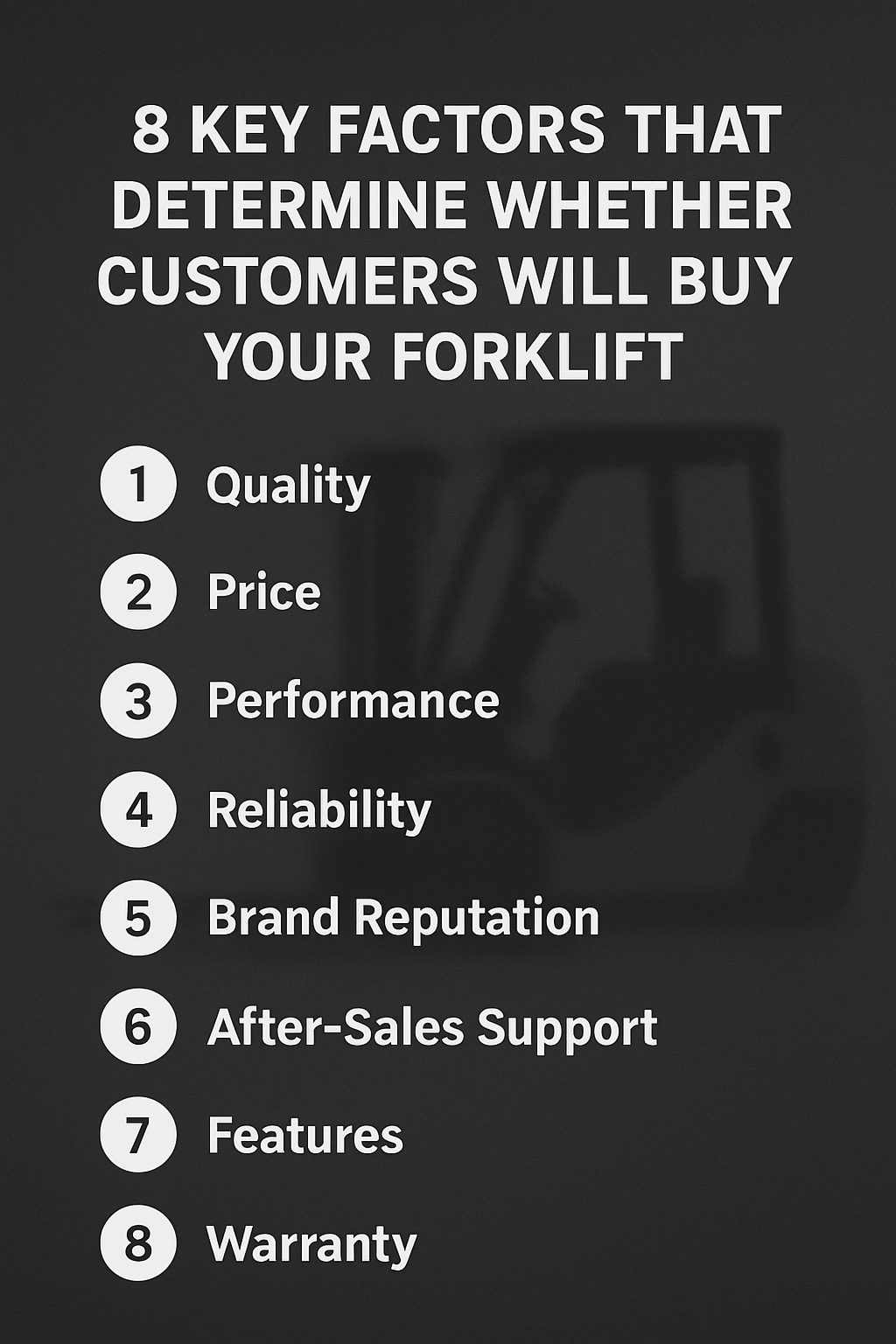
8 Key Factors That Determine Whether Customers Will Buy Your Forklift
In today’s competitive forklift market, customers evaluate many factors before making a decision. A forklift is a long term investment, so understanding what truly influences their buying behavior will greatly increase your closing rate. Below are the 8 most important factors that determine whether a customer chooses your forklift or not.
1. The customer’s actual needs
When the model you recommend matches their job requirements, your chance of closing the deal increases significantly. Key details include load capacity, lifting height, warehouse space, pallet type, usage frequency, and working environment.
2. Trust and expertise of the salesperson
Customers buy from people they trust. Strong product knowledge, clear explanations, confident guidance, and the ability to support after sales all play a crucial role in convincing the buyer.
3. Brand reputation and product quality
Different brands have different strengths:
-
EP excels in lithium battery technology and low operating cost
-
Toyota is known for durability
-
Heli provides competitive pricing and easy maintenance
Customers consider performance, stability, maintenance cost, and long term operating efficiency before choosing.
4. Pricing and payment policies
Reasonable pricing matters, but flexibility is equally important: payment terms, credit support, VAT invoice timing, and discounts all affect the final decision.
5. After sales service and warranty
Customers always worry: “Will I get support when something goes wrong?”
They care about response time, spare parts availability, nearby technicians, and warranty duration. Strong service builds confidence and accelerates decision making.
6. Delivery time
Fast delivery is a huge advantage, especially when customers need a forklift urgently for production schedules. Long waiting times can easily push them toward competitors.
7. Customer urgency and emotion
If the warehouse is overloaded or production is delayed, customers decide faster. If they are only comparing quotes, they typically need more nurturing before committing.
8. Competitors’ offers
Customers usually compare at least two or three suppliers. Understanding what they are comparing helps you position your product more effectively and highlight your advantages.