

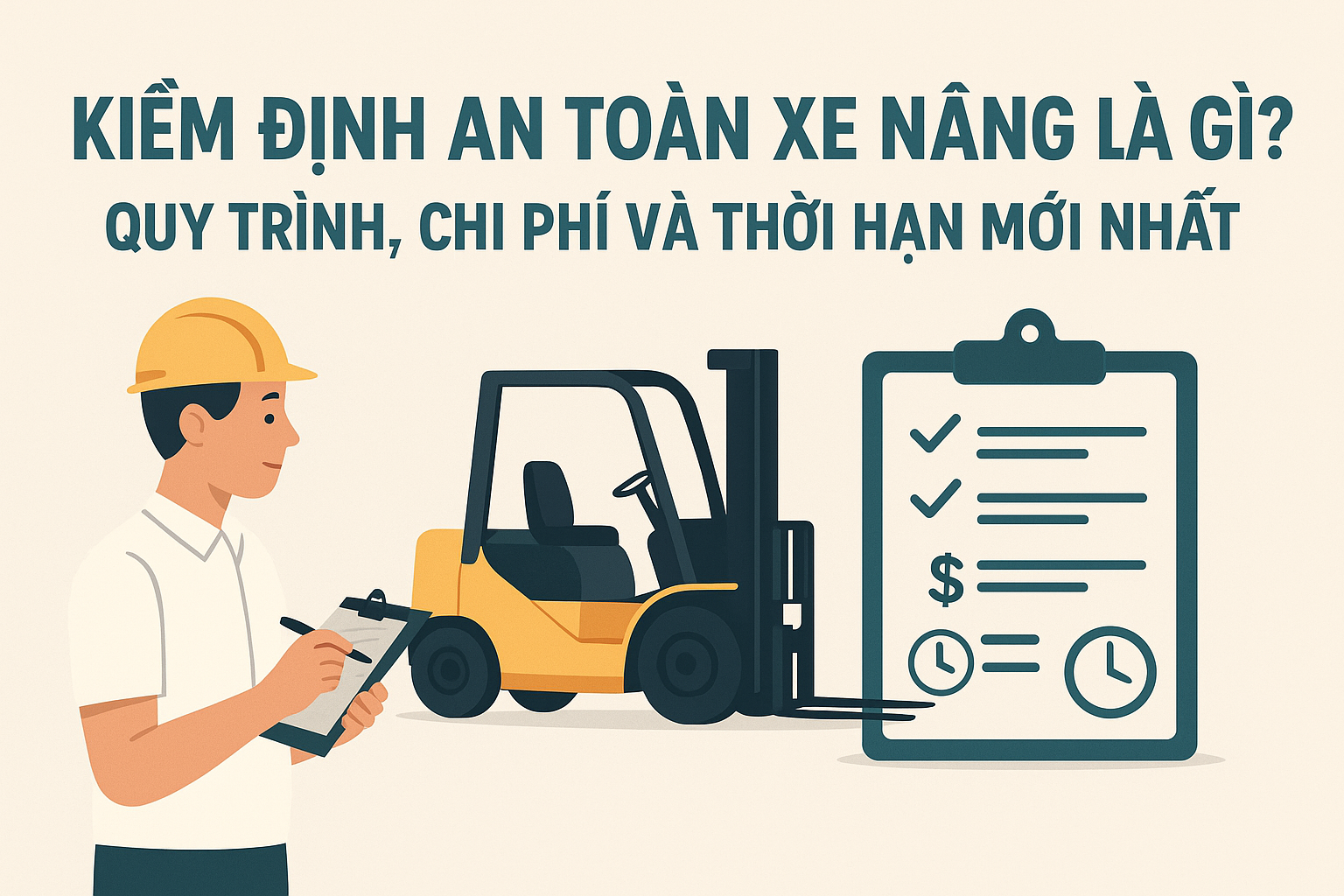
What Is Forklift Safety Inspection? Process, Cost, and Validity in 2025
Th10
🏗️ What Is Forklift Safety Inspection? Process, Cost, and Validity in 2025
1. Definition
A forklift safety inspection (also called a technical safety inspection) is a process to check and assess the forklift’s mechanical condition to ensure it meets all safety requirements before operation.
This is a mandatory procedure under Vietnamese law to prevent workplace accidents and ensure legal operation.
2. Purpose of the inspection
-
✅ Ensure operator and workplace safety.
-
✅ Detect technical faults early to prevent accidents.
-
✅ Serve as a legal basis for operation.
-
✅ Extend the forklift’s lifespan and reduce maintenance costs.
3. Legal basis
According to Circular No. 48/2016/TT-BLĐTBXH and QCVN 25:2015/BLĐTBXH,
All forklifts with a lifting capacity from 1,000 kg or more and with a driver seat must undergo technical safety inspection before being used.
4. Forklift inspection procedure
-
Document check – Certificate of origin, equipment records, manuals.
-
External inspection – Frame, mast, forks, tires, hydraulic system, lights.
-
Operational test – Lift, tilt, move forward/reverse, brakes, horn.
-
Load test – Lift 125% of rated load to ensure stability and safety.
5. Inspection intervals
| Type of forklift | Inspection cycle |
|---|---|
| New (first time) | Every 24 months |
| In use | Every 12 months |
| Over 10 years old | Every 6 months |
6. Authorized inspection agencies
Only units certified by the Ministry of Labor, Invalids and Social Affairs (MOLISA) can perform inspections, such as:
-
VINACONTROL
-
QUATEST 3
-
ISOCERT
-
Regional Safety Technical Centers (KV1, KV2, KV3)
7. Inspection cost
-
1–3 ton forklifts: VND 700,000 – 1,000,000 per inspection
-
5–10 ton forklifts: VND 1,200,000 – 1,500,000 per inspection
(Excluding travel expenses for on-site inspection)
8. Result
| Condition | Result |
|---|---|
| Pass | Issued safety certificate and inspection label |
| Fail | Must repair and re-inspect |
✅ Conclusion
Forklift safety inspection is a legal obligation and a practical step to ensure safe and efficient operation.
Always inspect regularly to maintain compliance, safety, and productivity.