

Should a Floor Scrubber Be Used in a Small Warehouse?
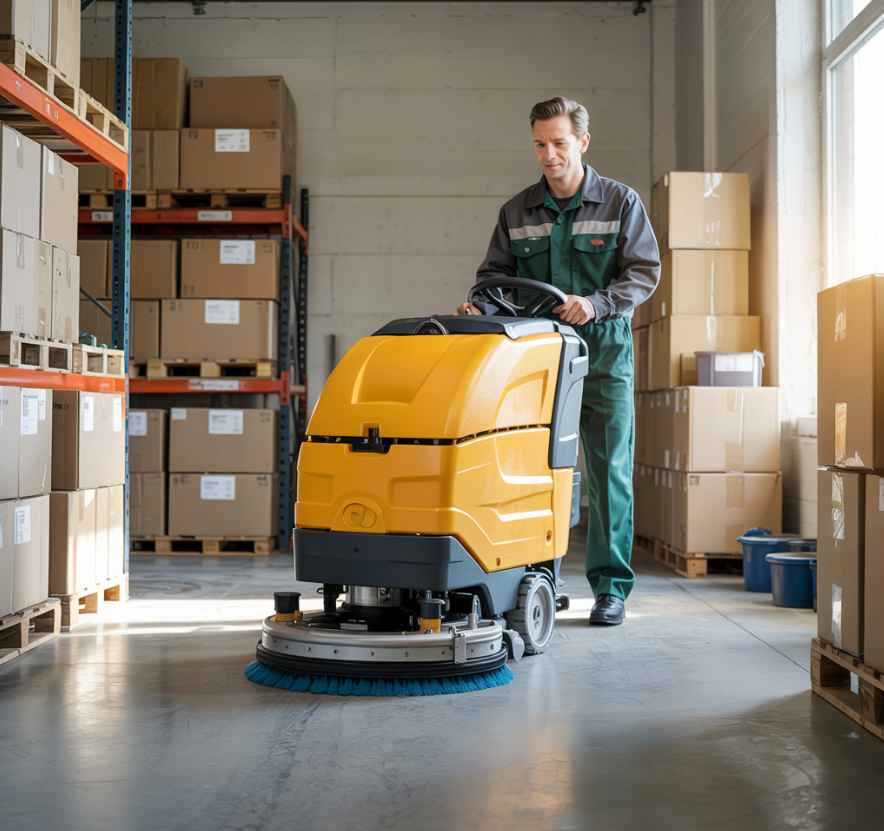
Th4
Whether to use a floor scrubber in a small warehouse depends on several factors, such as warehouse size, level of dirt accumulation, cleaning frequency, and investment cost. Below are some key considerations:
1. When SHOULD a floor scrubber be used?
-
Warehouse size of around 300m² or more: If your warehouse is large enough, using a floor scrubber will save time and effort compared to manual mopping.
-
Frequent dirt accumulation from dust, grease, or chemicals: If the floor is often covered in dust or stubborn stains, a floor scrubber will clean more deeply and efficiently.
-
High cleaning frequency: If the floor needs to be cleaned daily or multiple times a week, a floor scrubber optimizes the work and reduces labor.
-
Wide aisles with few obstacles: If the warehouse has clear pathways with minimal obstructions, the floor scrubber can move easily.
2. When SHOULD a floor scrubber NOT be used?
-
Too small and cramped warehouse: If the space is small (under 50m²) or has tightly packed shelves, maneuvering a floor scrubber will be difficult. Manual mopping may be more effective.
-
High investment cost: Floor scrubbers range from a few million to tens of millions of dong. If the warehouse is small and doesn’t require frequent cleaning, an industrial mop may be a more economical solution.
-
Unsuitable flooring: If the warehouse floor is uneven or too rough, the floor scrubber may not work effectively.
Alternative solutions for small warehouses
-
Handheld or mini floor scrubbers
-
Industrial mops with water wringers
-
Industrial vacuum cleaners with mopping functions
In summary, for a small warehouse, manual cleaning or a compact floor scrubber may be sufficient. For medium to large warehouses with frequent cleaning needs, a floor scrubber is a worthwhile investment. 🚀